 Wondering when is the best time to fertilize your lawn? The answer depends on your grass type and local climate. Typically, early spring is ideal for cool-season grasses that are common in Kansas City.
Ready to achieve a lush, green lawn that stands out in your neighborhood? Contact Doctor’s Lawn and Landscape today! As an award-winning company with over 30 years of experience in the Kansas City Metro Area, our team of experts is here to provide you with the best lawn care solutions tailored to your grass type and local climate. We ensure your lawn receives the essential nutrients it needs for optimal growth and resilience. Don’t wait any longer – call us at 913-681-8041 and let us help you create a beautiful, healthy lawn you’ll be proud of.
Understanding Lawn Fertilizer
Lawn fertilizer nourishes the lawn, supports root system growth, and balances unhealthy soil nutrients. When we fertilize grass properly, it leads to a lush green lawn, strong roots, prevents weed growth, and promotes biodiversity. A well-fed lawn appears thicker and is less vulnerable to pests and diseases. Fertilizers typically include essential nutrients like nitrogen, phosphorus, and potassium that are crucial for grass health.
Identifying Your Grass Type
In the Kansas City Metro Area, cool-season grasses are predominantly used. This distinction is important as the timing of fertilizer application is tailored to these grass types.
Cool-season grasses, such as Kentucky bluegrass and fescues, thrive in cooler temperatures and have their peak growing periods in early spring and fall. You can start fertilizing your lawn in early spring as early as March. Timing fertilization correctly is vital for the healthy growth of cool-season grasses, enhancing their resilience and preparing them for seasonal challenges.
Fertilizing at the right times not only boosts growth but also strengthens the grass for the coming months, ensuring it maintains a healthy and vibrant appearance throughout the growing season.
Seasonal Fertilization Guide
When grasses are actively growing is the best time to fertilize a lawn. Most lawns benefit from being fertilized about four times a year, though some may require up to seven applications depending on their specific needs.
Early spring, late spring, early summer, and early fall are key times for fertilizing your lawn. Each of these periods addresses different growth needs and prepares the grass for upcoming seasonal challenges.
Early Spring Fertilization
Early spring fertilization can begin as soon as March, depending on your local climate. Proper fertilization during this period strengthens roots and gives the grass an early start, helping it recover from winter and prepare for the growing season. After applying the fertilizer, it’s important to water the lawn thoroughly to help the nutrients soak into the soil.
If winterizing was done effectively, early spring fertilization can diminish the need for a subsequent round in late spring. Starting fertilization in early spring sets the foundation for a healthy, vibrant lawn that will flourish throughout the year.
Late Spring Fertilization
Late spring fertilization should occur between April and June to ensure optimal grass growth. Proper fertilization during late spring helps your lawn recover from winter stress and encourages growth.
Addressing the lawn’s nutrient needs during this period ensures it remains healthy and resilient as it transitions into the hotter summer months.
Early Summer Fertilization
Fertilization should be done between May and June to prepare your lawn for summer. One main benefit of early summer fertilization is that it helps the grass survive the intense heat of summer, minimizing stress and promoting healthy growth. Proper fertilization during early summer aids in protecting and strengthening grass against summer stress.
Providing your lawn with the necessary nutrients during this period ensures it remains robust and vibrant throughout the summer, even in extreme heat conditions.
Early Fall Fertilization
The ideal period for fertilizing your lawn in late summer to early fall is from August to September. This timing helps ensure optimal growth. Applying fall lawn fertilizer between August and November, ideally 6-8 weeks after summer feeding, promotes strong root growth and prepares the grass for winter. Applying winterizing fertilizer in late fall can enhance the lawn’s resilience through winter.
Factors Influencing Fertilization Timing
 Multiple factors, including the specific months and days chosen, can influence the timing of lawn fertilization. The type of lawn, weather conditions, and time of year all play significant roles in developing an effective fertilization schedule.
Weather Conditions
Weather conditions greatly influence the effectiveness of fertilization. It’s advisable to check the weather forecast before fertilizing your lawn to ensure optimal conditions. Fertilizing just before light to moderate rain can help distribute nutrients evenly and prevent wasting effort.
Ground temperature also affects fertilization effectiveness, with warmer soil enhancing nutrient uptake. Avoid applying fertilizer close to bodies of water or drainage areas.
Soil Testing
Conducting soil tests allows you to identify deficiencies in essential nutrients, and optimize fertilizer application. Adding compost improves soil condition, breaks up compacted areas, and encourages beneficial microorganisms.
Choosing the right fertilizer based on soil test results ensures that you address the specific nutrient gaps in your lawn.
Choosing the Right Fertilizer
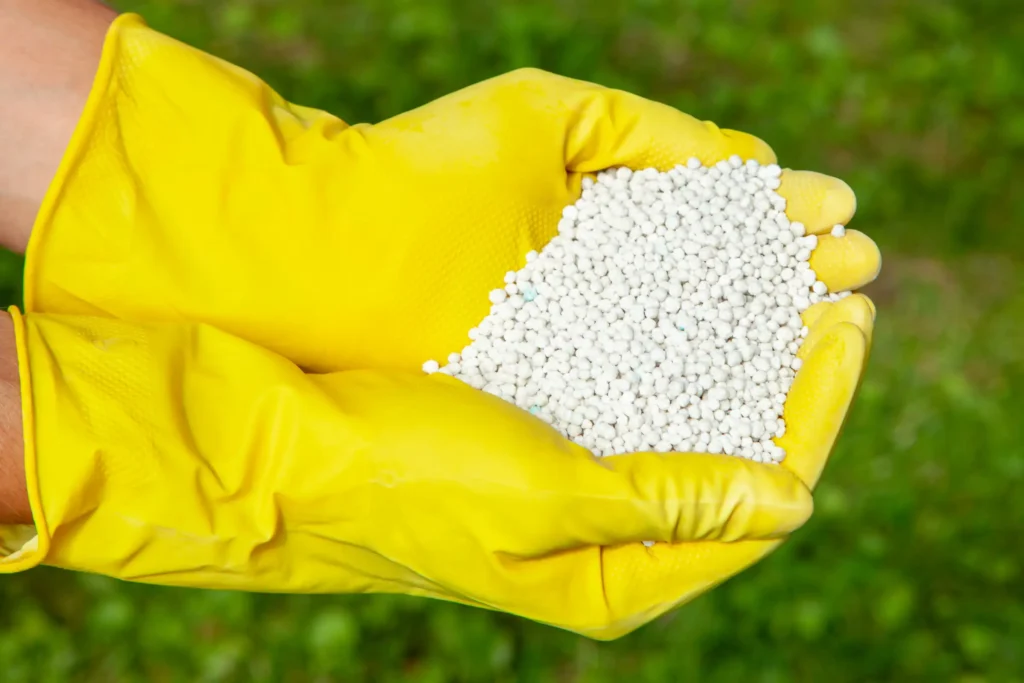
Types of fertilizers include time-release fertilizers that reduce the need for frequent applications by gradually feeding the lawn. Granular fertilizers are favored for their ease of application and can come in time-release or slow-release formulas. Liquid fertilizers supply nutrients quickly and can be applied directly, making them easy for immediate use.
Conducting a soil test reveals essential nutrient deficiencies, guiding the choice of fertilizer to ensure effective lawn nourishment.
Organic Fertilizers
Organic fertilizers are derived from natural materials and often include beneficial microorganisms that enhance soil health. Using organic fertilizer can improve drought tolerance in grass by promoting deep root growth and providing vital micronutrients. Products like Espoma Organic Lawn Food provide a balanced blend of nutrients, improve soil health, and encourage deep root growth.
Synthetic Fertilizers
Synthetic fertilizers are made from natural components, minerals, gasses, and inorganic waste materials. These fertilizers process quickly through the soil, leading to rapid nutrient availability in the grass and promoting quick growth. However, using too much synthetic fertilizer can damage the lawn, so it’s important to follow the fertilizer label instructions carefully.
Weed and Feed fertilizer is not recommended. This is because it does not coincide with the best timing to kill weeds and fertilize grass.
Application Tips for Optimal Results
Using the correct amount of fertilizer is essential to avoid nutrient imbalance in the soil. Over-fertilization can lead to grass damage, often referred to as ‘fertilizer burn’. It’s recommended to apply fertilizer in the late afternoon or early evening to avoid burning the grass. Always apply fertilizer to dry grass to prevent burning and ensure better absorption.
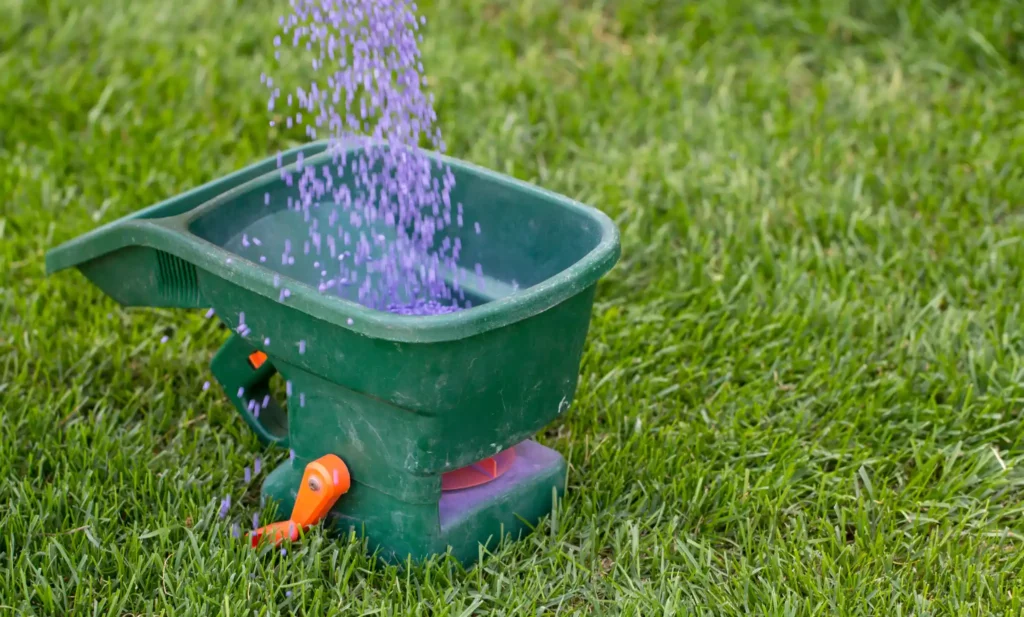
Using a spreader helps ensure even fertilizer distribution, preventing patchy grass growth. A hand-held spreader is suitable for smaller lawns, while a broadcast spreader is ideal for larger areas. Following these tips will help you achieve healthy growth and enhance your lawn’s curb appeal.
Using Granular Fertilizer
Granular fertilizers are a popular choice for many homeowners due to their ease of application and effectiveness. A recommended tool for applying granular fertilizer is the Scotts® WhirlTM Hand-Powered Spreader. To achieve even coverage, use a lawn spreader and apply the fertilizer in straight lines.
Granular fertilizers can come in time-release or slow-release fertilizer formulas, both of which help provide a steady supply of nutrients to the lawn.
Avoiding Too Much Fertilizer
Using too much synthetic fertilizer can damage the lawn, a problem known as ‘fertilizer burn’. To avoid over-fertilization, follow the fertilizer label instructions carefully. It’s also important to consider the type of grass and its specific nutrient needs when determining the amount of fertilizer to apply.
Adhering to recommended application rates and timing prevents nutrient imbalance and ensures your lawn remains healthy and vibrant. Avoiding too much fertilizer is key to maintaining a well-fed lawn that is less susceptible to pests and diseases.
Doctor’s Lawn and Landscape: Expert Fertilization for a Vibrant Lawn
 Doctor’s Lawn and Landscape is dedicated to helping you achieve a healthy, vibrant lawn through expert fertilization services. Our team understands the importance of timing, grass type, and the right fertilization techniques to ensure your lawn flourishes throughout the year. With our comprehensive approach, we provide tailored solutions that cater to the specific needs of your lawn.
By choosing Doctor’s Lawn and Landscape, you can trust that your lawn will receive the essential nutrients it needs for strong root growth, lush green appearance, and resilience against environmental stressors. Let us help you create a beautiful lawn that enhances your home’s curb appeal and provides a welcoming outdoor space for you and your family, call us today at 913-681-8041.