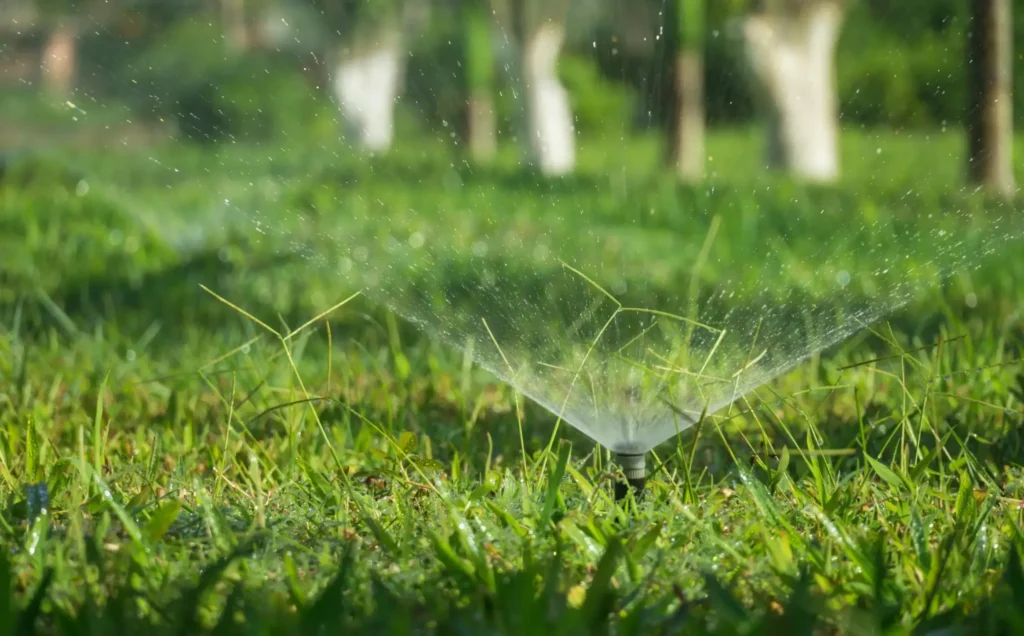
 Maintaining a healthy lawn relies heavily on proper watering techniques. Incorrect watering practices can lead to problems such as over watering or underwatering. Overwatering can cause shallow root growth, disease, and pest problems, while underwatering can result in dull green or brown grass.
Preventing your lawn from turning brown is an important aspect of summer lawn maintenance. Brown patches often indicate that your lawn is stressed due to insufficient water or improper watering techniques.
Climate conditions could influence your lawn’s watering needs. In hot and dry climates, you may need to water more often, whereas in cooler and wetter climates, you can water less frequently. The frequency of watering depends on the specific climate conditions.
Consulting professionals can provide expert advice and services for more specialized care. At Doctor’s Lawn and Landscape, an award-winning company serving the Kansas City Metro Area, we have over 30 years of experience offering customized lawn care services to help you achieve and maintain a beautiful lawn. Our team can assess your lawn’s specific needs, considering factors like soil type, grass variety, and local climate conditions.
We can also provide tailored watering schedules, fertilization plans, and pest control measures to keep your lawn healthy and vibrant all year round. By leveraging our extensive knowledge and advanced tools, you can avoid common lawn care mistakes and enjoy a lush, green lawn with minimal effort on your part.
Ready to transform your lawn? Contact us today at 913-681-8041 to schedule a consultation and let us help you achieve the lawn of your dreams!
1. Water Early in the Morning
Early morning watering ranks as one of the most effective lawn care tips. Watering grass in the early morning also helps prevent fungal growth, which can occur if the grass remains wet for extended periods. Following proper lawn watering tips reduces evaporation, allowing more water to penetrate the soil and reach the roots.
Setting an early morning watering routine ensures that water is absorbed efficiently before the heat of the day causes it to evaporate. During late spring and early fall, when temperatures are more moderate, you may need to adjust your watering frequency accordingly.
Maintaining a healthy lawn requires a consistent watering schedule. Watering early in the morning allows the grass to dry out during the day, reducing the risk of diseases caused by prolonged moisture. This practice is particularly beneficial for lawns in full sun, as it maximizes water absorption and retention.
2. Deep Watering Sessions
Promoting deep root growth and overall lawn health necessitates deep watering sessions. By watering your lawn deeply but infrequently, you encourage the grass to develop stronger roots that can withstand drought conditions. Aim for 1 to 1.5 inches of water per week, moistening the soil to a depth of 6-8 inches.
Using tools like rain gauges or soil moisture meters can help you measure water depth accurately. After a deep watering session, use a small trowel to check if the water has reached the root zone. This ensures that the grass roots are receiving adequate hydration.
Deep watering sessions have several benefits for your lawn, including:
- Preventing shallow root growth, which can make your lawn more susceptible to drought and disease
- Promoting deep root growth, creating a more resilient and healthy lawn
- Helping your lawn thrive even in challenging conditions
3. Adjust Your Watering Schedule Based on Soil Type
An effective watering schedule depends on understanding your soil type. Different soil types have varying water retention capacities, which means their watering needs differ. Sandy soils, for example, drain quickly and require more frequent watering to prevent the soil from becoming too dry. Clay soils, on the other hand, retain water longer and benefit from less frequent, deeper watering sessions.
You can determine your soil type by placing soil in a glass jar, shaking it, and observing the water clarity. Sandy soil feels gritty and doesn’t hold together well, whereas clay soil has a sticky texture and holds its shape when squeezed.
Once you’ve identified your soil type, you can adjust your watering schedule accordingly. For sandy soils, more frequent watering is necessary, whereas clay soils require deeper, less frequent watering to ensure proper hydration without waterlogging.
At Doctor’s Lawn and Landscape, we can help you understand your soil type and create a customized watering schedule. Our experts use advanced tools to monitor water levels accurately and adjust your watering schedule based on your lawn’s specific needs. This ensures your lawn gets the right amount of water, promoting deep root growth and overall health.
4. Monitor Weather Conditions
Your lawn’s watering needs are largely determined by weather conditions. In hot and dry climates, lawns require more frequent watering to stay healthy, while cooler and wetter climates may reduce the need for supplemental irrigation.
Monitoring weather conditions helps you adjust your watering schedule accordingly. For instance, if there has been regular rainfall, you can skip watering sessions to avoid overwatering. Using a rain gauge can help you track rainfall and make informed decisions about when to water your lawn.
5. Use Proper Sprinkler Systems
Efficient lawn watering depends on choosing the right sprinkler system. Above-ground sprinklers are simple and affordable, attaching to a garden hose and providing easy setup. In-ground sprinkler systems offer more advanced options, featuring stationary heads connected to an underground network for comprehensive coverage.
Manual irrigation, using a hose with a sprayer head, allows for direct control but requires more effort. Sprinkler irrigation systems, suitable for large areas, often include rotating heads for even water distribution.
Smart irrigation systems can be programmed to water specific areas at optimal times, enhancing water efficiency. Effective lawn watering and prevention of issues like water waste or uneven coverage hinge on proper sprinkler system maintenance.
6. Avoid Overwatering
Not watering your lawn enough can be as damaging as overwatering it. An overwatered lawn often feels spongy when walked upon, and the appearance of mushrooms can be a sign of excessive moisture. Overwatering can result in shallow root growth, which can create an environment that is susceptible to diseases and pest issues.
To avoid overwatering, monitor the soil moisture levels and adjust your watering schedule accordingly. Footprints remaining visible for over 30 minutes on your lawn can indicate that it needs water.
Watering at the wrong time or in the wrong way can lead to serious issues such as disease or brittle roots. To avoid these problems, follow these watering tips: aim for about 1 to 1.5 inches of water each week and use tools like rain gauges to measure water depth accurately.
Regular Maintenance Services
A healthy lawn is the result of regular maintenance services from Doctor’s Lawn and Landscape, including the use of quality grass seed and grass seeds. This involves mowing, fertilization, and aeration. Aeration improves drainage and allows air, water, and nutrients to reach the grassroots, reducing soil compaction and promoting stronger root growth.
Grass care tips that Doctor’s Lawn and Landscape can help with:
- Water your grass a day before applying lawn nutrients to aid absorption.
- Use a high-quality lawn fertilizer for your specific turf variety to ensure the best results for your lawn.
- Conduct a soil test to identify any nutrient deficiencies.
- Fertilize your soil during the recommended seasons.
At Doctor’s Lawn and Landscape, our team provides expert advice and maintenance services to keep your lawn healthy and beautiful. We can help with everything from mowing and fertilization to aeration and weed control. Let us take care of your lawn so you can enjoy a lush, green yard without the hassle.
How Doctor’s Lawn and Landscape Can Help You
Overwatering can be just as detrimental to your lawn as underwatering, leading to shallow root growth, increased susceptibility to disease, and pest problems. At Doctor’s Lawn and Landscape, we understand the complexities of proper lawn hydration and offer services to help you avoid the pitfalls of overwatering.
Expertise and Experience
With over 30 years of experience in the lawn care industry, our team has the knowledge and skills to assess your lawn’s unique needs. We understand that different soil types, grass varieties, and climate conditions require tailored watering schedules. Our professional assessments ensure that your lawn receives the optimal amount of water, promoting deep root growth and overall lawn health.
Customized Watering Plans
We create customized watering plans based on your lawn’s specific requirements. We use advanced tools like soil moisture meters and rain gauges to monitor water levels accurately. By adjusting watering schedules according to real-time data, we help prevent overwatering and ensure your lawn gets just the right amount of hydration.
State-of-the-Art Irrigation Systems
Doctor’s Lawn and Landscape offers the installation and maintenance of state-of-the-art irrigation systems. Our smart irrigation systems can be programmed to water specific areas of your lawn at optimal times, enhancing water efficiency and reducing waste. These systems adapt to changing weather conditions, ensuring your lawn remains healthy without the risk of overwatering.
Professional Lawn Care Services
Our comprehensive lawn care services go beyond just watering. From mowing and fertilization to aeration and weed control, we provide everything your lawn needs to thrive. By entrusting your lawn care to our professionals, you can avoid the guesswork and potential mistakes that come with DIY lawn maintenance.
Peace of Mind
Choosing Doctor’s Lawn and Landscape means choosing peace of mind. Our team is dedicated to delivering exceptional results, ensuring your lawn remains lush, green, and healthy. Don’t risk the health of your lawn by trying to figure it out on your own. If you’re in the Kansas City Metro Area, contact us today at 913-681-8041 to schedule a consultation and let us help you achieve the beautiful lawn you deserve.
Frequently Asked Questions
How often should I mow my lawn to maintain its health?
Mowing frequency depends on the type of grass and the season. Generally, it’s best to mow your lawn once a week during the growing season.
Can I water my lawn at night if I miss the morning window?
While it’s best to water your lawn early in the morning, you can water it at night if necessary. However, nighttime watering can increase the risk of fungal diseases since the grass remains wet for longer periods. If you must water at night, try to do so earlier in the evening to give the grass some time to dry before nightfall.
What is the best way to handle weeds in my lawn without using chemicals?
Manual removal and proper lawn care practices are effective ways to manage weeds without chemicals. Regular mowing, overseeding, and maintaining healthy soil can help prevent weed growth. Additionally, using natural weed control methods such as vinegar or boiling water can target specific weeds without harming your lawn.
How can I tell if my lawn is getting enough water?
One way to check if your lawn is getting enough water is to use a rain gauge or a simple can to measure the amount of water applied. Your lawn should receive about 1 to 1.5 inches of water per week. Additionally, healthy grass will spring back when stepped on, whereas under-watered grass will remain flat.
Should I fertilize my lawn before or after watering?
It’s generally best to water your lawn before applying fertilizer. Watering helps the soil absorb the nutrients more effectively and reduces the risk of burning the grass. After applying fertilizer, a light watering can help settle the fertilizer into the soil, but avoid heavy watering to prevent runoff.