 Choosing the right lawn fertilizer can significantly enhance your lawn’s potential to grow beautiful, thick grass. It not only promotes healthy growth but also reduces the appearance of weeds, leading to a rich, green coloring and dense coverage. Selecting the perfect fertilizer requires careful consideration of factors such as the type of grass, soil conditions, and the time of year.
Ready to transform your lawn into a lush, green oasis? Contact Doctor’s Lawn and Landscape today at 913-681-8041 to speak with Kansas City’s leading lawn care experts. With over 30 years of award-winning experience in the Kansas City Metro Area, we offer personalized solutions tailored to meet your specific fertilization needs. Whether you need guidance on selecting the best fertilizer for your grass type and soil conditions, routine maintenance, or custom landscaping, our award-winning team is here to help. Don’t wait—call us now and take the first step towards achieving the vibrant and healthy lawn of your dreams!
1. Understand Your Grass Type
Identifying your grass type is the first step toward picking the right fertilizer for your lawn. Different grasses have varying nutrient requirements and growth patterns, which significantly influence the type of fertilizer you should use. Appreciating these differences aids in customizing your fertilization strategy, thereby promoting optimal grass growth.
Cool season grasses, including Kentucky bluegrass and fescue, thrive in temperatures ranging from 60-75°F. These grasses are common in the northeastern and midwestern United States due to their ability to withstand cold weather. They grow most actively in the spring and fall, making these seasons ideal for fertilization and grass seed application.
To support their growth surge during cooler weather, cool-season grasses benefit from higher nitrogen fertilizers. Nitrogen promotes lush, green growth and helps the grass maintain its vibrant color. Ensuring your cool season grass receives the right nutrients will keep your lawn looking healthy and dense throughout the growing season.
2. Test Your Soil
A soil test determines the nutrient and pH levels of your soil, assisting in the selection of the ideal lawn fertilizer for your yard. A soil test provides a snapshot of your soil’s current nutrient levels and can indicate which nutrients are deficient, allowing for targeted fertilizer application to improve lawn health.
Soil tests should be conducted every three to five years or whenever you make significant changes to your lawn, such as converting a lawn to a garden bed. By understanding your soil’s specific needs, you can make informed decisions about applying compost, manure, or fertilizers to create the ideal growing environment for your grass.
Using a Soil Test Kit
A soil test kit offers a simple method for gauging soil texture, pH, organic matter, and phosphorus and potassium levels. To get accurate results, collect 15-20 samples from different spots in your lawn and mix them together to create a representative sample. Ensure that all samples are taken from the same depth, typically around 6 inches, for consistency.
Once you have your sample, follow the instructions provided with the soil test kit to analyze the soil. The results will help identify any nutrient deficiencies or pH imbalances, enabling you to select the right fertilizer and amendments to address your lawn’s specific needs.
Interpreting Soil Test Results
Deciphering soil test results is key to making knowledgeable decisions about lawn fertilization. Soil test reports typically include:
- Nutrient levels
- pH
- Organic matter
- Recommendations for amendments
The soil test results will come with recommendations for fertilizing based on the nutrient composition and deficiencies identified. For example, if your lawn lacks nitrogen, you might notice light green or yellow-green grass instead of a dark green hue. Acting on these recommendations will help you create a vibrant and healthy lawn.
3. Choose the Right Fertilizer Composition
Selecting the right fertilizer composition requires a grasp of the NPK (Nitrogen, Phosphorus, Potassium) values on fertilizer labels and deciding between organic or synthetic fertilizers. The NPK values indicate the percentage of these three essential nutrients in the fertilizer, which are crucial for promoting grass growth.
Grass type and existing soil nutrients are the main factors that determine what nutrients your lawn needs. By selecting the right NPK ratio and choosing between organic and synthetic fertilizers, you can ensure your lawn receives balanced nutrition for optimal growth and health.
Nitrogen, Phosphorus, and Potassium (NPK)
Understanding the NPK ratio on fertilizer labels is key to selecting the right nutrient composition for your lawn. The three numbers on a fertilizer label indicate the quantities of Nitrogen (N), Phosphorus (P), and Potassium (K) in the fertilizer. These nutrients are essential for plant growth and health.
- Nitrogen (N) is essential for blade growth and chlorophyll production
- Phosphorus (P) promotes root growth and energy production
- Potassium (K) enhances stress resistance
For established and healthy lawns, high-nitrogen fertilizers are typically recommended, while new lawns benefit from higher phosphorus and potassium to promote root and top growth. Choosing the best lawn fertilizer with the right NPK ratio based on your lawn’s needs will ensure balanced nutrition and robust growth. Using a lawn starter fertilizer for new lawns can be especially beneficial in promoting strong initial growth.
Organic vs. Synthetic Fertilizers
When choosing between organic and synthetic fertilizers, it’s important to consider the advantages and disadvantages of each. Organic fertilizers, including organic fertilizer, improve soil structure, support soil life by breaking down organic matter, and are safe for pets. However, they are generally more expensive than synthetic options.
Synthetic lawn fertilizers are more affordable and provide faster results, but they may harm beneficial soil organisms and contribute to water pollution. By weighing these pros and cons, you can make an informed decision on the best type of fertilizer for your lawn, including considering the use of organic lawn fertilizer.
4. Timing Your Fertilizer Application
Timely fertilizer application is essential in maintaining lawn density, health, and resistance against weeds and diseases. Soil temperature plays a significant role in determining the best time to fertilize, with cool-season grasses needing cooler soil temperatures.
Fertilizing at the optimal time supports root growth and ensures that the grass receives the necessary nutrients for robust growth. However, over-fertilizing can harm grassroots and leave lawns scorched, so it’s important to follow recommended application frequencies.
Seasonal Fertilizing Tips
Seasonal fertilizing is essential for maintaining a healthy lawn in the Midwest. Cool-season grasses benefit from fertilization mainly in the fall and spring, ensuring optimal growth. The best time to fertilize lawns in the Midwest regions, including states like Kansas and Missouri is in the fall.
By using seasonal lawn fertilizers and fertilizing your lawn during these periods, you can ensure a lush and healthy lawn throughout the year. By following these seasonal guidelines, you can promote consistent grass growth and maintain a vibrant lawn.
Slow Release vs. Quick Release Fertilizers
Slow-release fertilizers provide the following benefits:
- Uniform application
- Reduced nutrient loss through soil and air
- Ideal for maintaining steady nutrient release over time
- Require fewer applications, sometimes only twice a year
- More convenient for lawn care
Quick-release fertilizers, on the other hand, provide immediate nutrients to the lawn but require more frequent applications throughout the season. While they offer faster green-up, there’s a higher risk of nutrient runoff and potential lawn damage if not applied correctly.
Choosing between these types depends on your lawn’s nutrient needs and your desired application frequency.
5. Proper Fertilizer Application Techniques
Appropriate fertilizer application techniques are vital to guarantee uniform nutrient distribution and prevent potential lawn damage. Before applying fertilizer, prepare your lawn by watering it a few days in advance. Always read the directions on both the spreader and the fertilizer bag to ensure you’re following the correct application procedures.
Applying too much fertilizer can make your lawn more susceptible to diseases and cause excessive thatch buildup. After applying fertilizer, lightly water the entire lawn to help flush the nutrients into the soil and prevent runoff. By following these techniques, you can maximize the effectiveness of your fertilizer and maintain a healthy lawn.
Granular Fertilizer Application
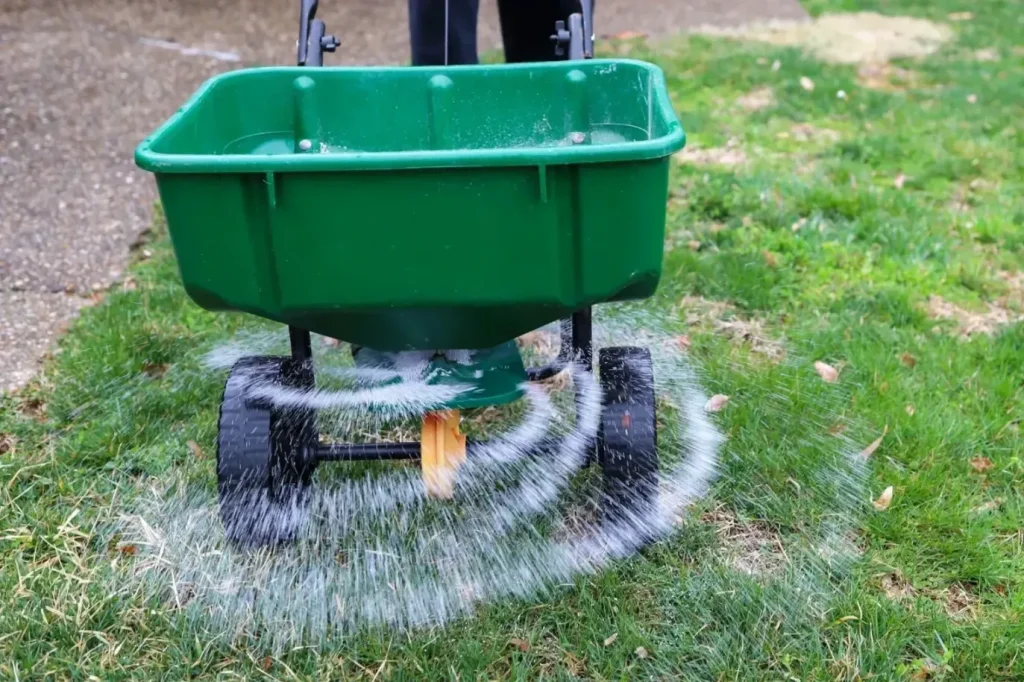
Granular fertilizers offer more even coverage and slow-release nutrients, but they require a more complex application process. These fertilizers are dry and typically slow-release, providing nutrients over an extended period. To apply granular fertilizers effectively, use a hand, drop, or push spreader for even coverage.
Broadcast spreaders:
- Drop fertilizer from a hopper onto a spinning disc that disperses it over the lawn
- Cover straight lines with little waste but must be used carefully to avoid creating stripes
- It’s crucial to calibrate and clean your spreader before use to ensure accurate application
- Walking in straight lines at a consistent pace helps spread granular fertilizer evenly across the lawn.
Liquid Fertilizer Application
Liquid lawn fertilizer provides faster green-up and easier application but may result in patchy coverage and a higher risk of burning the grass. These quick-release grass fertilizer products are easily applied by spraying on the lawn. To ensure even and effective nutrient delivery, use a sprayer when applying liquid fertilizers.
When spraying liquid fertilizer, avoid windy days to ensure even application and follow safety measures like wearing protective gear. By adhering to these guidelines, you can achieve a vibrant lawn with minimal risk of over-application.
Let Doctor’s Lawn and Landscape Handle Your Fertilization Needs
Fertilizing your lawn can be a complex and time-consuming task, requiring a deep understanding of grass types, soil conditions, and seasonal timing. This is where Doctor’s Lawn and Landscape excels. As Kansas City’s leading lawn care experts, we bring over 30 years of award-winning experience to ensure your lawn receives the precise care it needs.
Our team is adept at interpreting soil test results, selecting the right fertilizer composition, and applying it at the optimal times to promote healthy, lush growth. We understand that each lawn is unique, and our customized fertilization plans are tailored to meet your specific requirements, ensuring balanced nutrition and robust grass growth.
Why struggle with the intricacies of lawn fertilization when you can rely on our expertise? Let us take the guesswork out of the process and provide you with a vibrant, green lawn that stands out in your neighborhood. From routine maintenance services to specialized treatments, Doctor’s Lawn and Landscape is your go-to resource for all your fertilization needs.
Additional Lawn Care Services
Doctor’s Lawn and Landscape aims to be a comprehensive resource for all lawn and landscaping needs in the Kansas City Metro Area, Lake of the Ozarks, and Overland Park areas. We offer a range of services, including maintenance services, landscaping, and irrigation, to meet all your lawn care requirements.
Our team prides itself on crafting bespoke landscape designs that augment both the beauty and practicality of your property. From custom construction projects using high-quality natural materials like natural stone and decorative landscape gravel to continuous support and plant care, we ensure your landscape remains healthy and beautiful.
Contact Doctor’s Lawn and Landscape
We invite you to get in touch with Doctor’s Lawn and Landscape, Kansas City’s leading lawn care experts, for any queries or assistance in determining the services you require. We take a customized approach for each client to meet their specific needs.
Our award-winning service is tailored to meet the unique landscaping needs of each client, ensuring clear and frequent communication to bring your vision to life. Reach out to us today at 913-681-8041 and let us help you achieve a vibrant and healthy lawn.
Frequently Asked Questions
How often should I fertilize my lawn?
Fertilize your lawn four or more times a year to keep it healthy, but avoid fertilizing more than twice yearly to prevent harm to the grassroots and scorching.
What is the best time to fertilize cool-season grasses?
The best time to fertilize cool-season grasses like Kentucky bluegrass is in the fall and spring to ensure optimal growth. Avoid fertilizing during extreme temperature conditions for the best results.
How do I interpret soil test results?
You can interpret soil test results by reviewing nutrient levels, pH, organic matter, and recommendations for amendments. Acting on these recommendations will help you improve the health of your lawn.
What are the benefits of using organic fertilizers?
Using organic fertilizers can improve soil structure, support soil life, and are safe for pets, but they may be more expensive than synthetic options.
What should I do if my lawn fertilizer burns my grass?
If your lawn fertilizer burns your grass, the first step is to water the affected area thoroughly to help flush out the excess fertilizer from the soil. Ensure you water deeply and consistently over the next few days to dilute the fertilizer concentration. Avoid applying any more fertilizer until the grass has recovered. You may also need to rake away any dead grass and reseed the affected areas to promote new growth. Regular monitoring and proper watering can help restore your lawn to its healthy state.