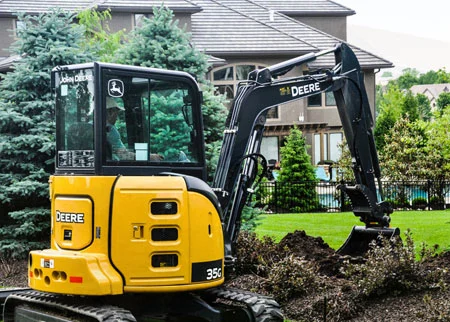
 Maintaining a lush, green lawn can be challenging, but with the right techniques, you can achieve a beautiful, healthy yard. Doctor’s Lawn and Landscape, an award-winning company with over 30 years of experience in the Kansas City Metro Area, is here to help and teach you three effective methods for lawn aeration and overseeding to enhance your lawn’s health and appearance. Whether you’re dealing with soil compaction, bare spots, or thinning grass, these techniques will provide the solutions you need.
Ready to give your lawn the care it deserves? Contact Doctor’s Lawn and Landscape today at 913-681-8041 for professional lawn care services. Our experts are here to help you achieve the lush, green lawn you’ve always wanted.
Understanding Lawn Aeration and Overseeding
Maintaining a healthy and vibrant lawn necessitates practices such as aeration and overseeding. Lawn aeration involves perforating the soil with small holes to improve the flow of air, water, and nutrients to the grass roots, thereby alleviating soil compaction and promoting healthier grass growth. This process helps create a thicker turf with improved resistance to pests, diseases, and drought conditions, ensuring your lawn remains lush and green throughout the year. The three methods are:
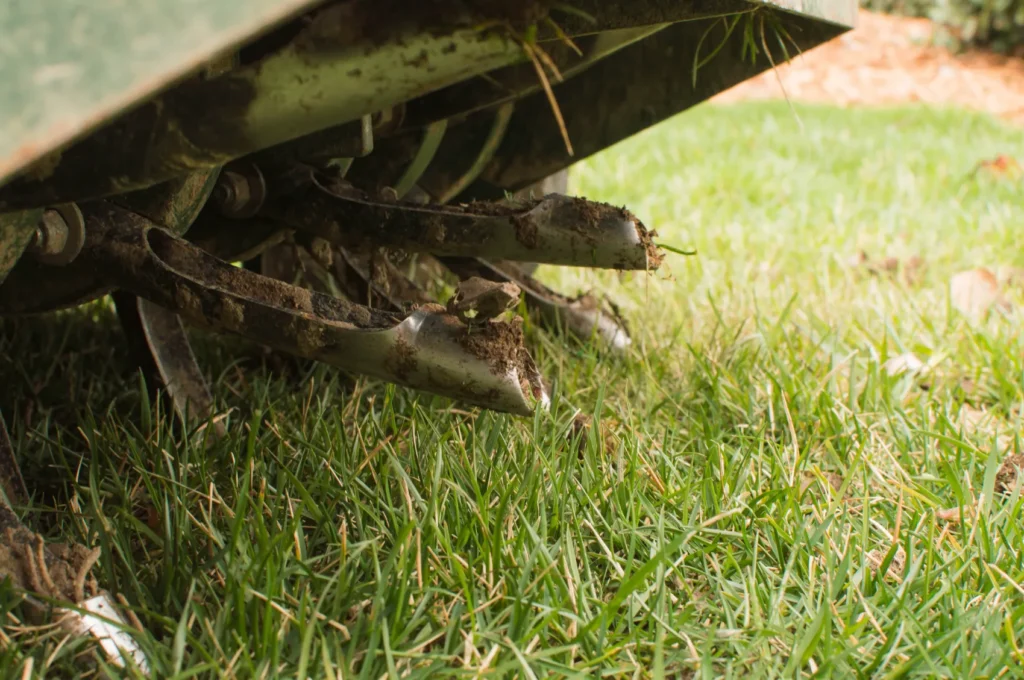
- Core Aeration Method: This method involves removing small plugs of soil from the lawn, creating holes that allow air, water, and nutrients to penetrate the grass roots more easily. It is highly effective in alleviating soil compaction and promoting healthier turf.
- Spike Aeration Method: Involves poking holes into the soil with solid, spike-like tines. This method is generally more affordable and accessible for homeowners but may not provide long-term relief from soil compaction compared to core aeration.
- Liquid Aeration Method: This newer method involves spraying an organic mix directly onto the lawn to break down thatch and introduce nutrients. It is particularly effective for large areas and provides long-lasting effects without the need for mechanical aeration.
Overseeding involves spreading new grass seeds over your existing lawn. This helps fill in bare spots and enhances the variety of grass in your lawn. This practice is especially important as mature grass plants slow down their growth over time, and young grass needs to outpace this dieback. The combination of aeration and overseeding can mend the summer wear and tear on your lawn, enhance soil health, and promote a stronger, more resilient lawn.
Best Time for Lawn Aeration and Overseeding
The scheduling of lawn aeration and overseeding is crucial for achieving the best outcomes. In the Kansas City Metro Area, early fall and spring are ideal times for these practices, providing optimal growing conditions for cool-season grasses. The warm days and cool nights during early fall are perfect for seed germination and root development, while ample rainfall helps maintain soil moisture. Additionally, Kansas City’s soil tends to stay warm well into November, giving new grass seeds an extended period to establish strong roots before winter. Monitoring soil moisture levels closely during these peak seasons supports the germination and growth of new grass.
At Doctor’s Lawn and Landscape, we understand that timing is important when it comes to lawn aeration and overseeding. Our team of experts can help you plan the best time for these essential lawn care practices, ensuring optimal growing conditions for your grass. By analyzing your lawn’s specific needs and the regional climate, we can recommend the ideal periods for aeration and overseeding specific to your lawn. Our professional services include soil testing, customized care plans, and the use of state-of-the-art equipment to ensure your lawn receives the best treatment possible.
Core Aeration Method
Core aeration is a highly effective method that involves removing small plugs of soil from the lawn, creating holes that allow air, water, and nutrients to penetrate the grass roots more easily. The small holes created during core aeration enable roots to expand and improve turf quality and vitality.
This method alleviates soil compaction and promotes healthier turf by managing thatch more efficiently than other methods. Thatch is a layer of dead grass and organic debris that accumulates between the soil and the grass blades, often hindering water, nutrients, and air from reaching the grass roots.
Benefits of Core Aeration
Core aeration offers numerous benefits for your lawn, including:
- Breaking up compacted soil layers
- Improving soil structure, allowing water, nutrients, and fertilizers to flow more easily to the roots
- Boosting water infiltration, facilitating easier penetration of air and water into the soil
- Stimulating root growth, reinvigorating the lawn and promoting stronger, more resilient grass
Another advantage of core aeration is that it reduces soil compaction, which in turn improves drainage and helps maintain the overall health of the grass. Signs that your lawn may need aeration include heavy foot traffic, a spongy feel, or puddles of water on the lawn. By addressing these issues through core aeration, you can promote optimal soil health and set the stage for healthy grass growth.
When Core Aeration Might Not Be the Right Choice for Your Lawn
While core aeration is highly beneficial for many lawns, there are certain situations where it might not be the best option. Here are some scenarios where alternative methods may be more suitable:
- Newly Seeded or Sodded Lawns: Core aeration can disrupt the establishment of new grass. If your lawn has been recently seeded or sodded, it is advisable to wait at least a year before performing core aeration to allow the new grass to establish strong roots.
- Dry or Hard Soils: Core aeration may be ineffective if your soil is extremely dry or hard. In such cases, it is better to water the lawn thoroughly a few days before aeration or consider using liquid aeration, which can penetrate hard soils more effectively.
- Excessively Wet Lawns: Performing core aeration on overly wet lawns can lead to soil compaction instead of alleviating it. It is important to ensure the soil is moist but not waterlogged before aeration. If your lawn tends to be excessively wet, consider improving drainage before opting for core aeration.
- Lawns with Shallow Tree Roots: If your lawn has shallow tree roots, core aeration can damage these roots and negatively impact the health of your trees. In such cases, spike aeration or liquid aeration might be a better alternative to avoid harming tree roots.
- Lawns with Minimal Compaction: Core aeration might be unnecessary if your lawn does not suffer from significant soil compaction. Over-aerating can lead to unnecessary stress on the grass. Evaluate the level of compaction and choose the appropriate aeration method accordingly.
By understanding when core aeration may not be the ideal choice, you can make informed decisions about the best lawn care practices to maintain a healthy and vibrant yard. Doctor’s Lawn and Landscape can help you evaluate your lawn’s specific conditions and recommend the most suitable aeration method. Our experts will assess factors such as soil type, grass health, and any unique challenges your lawn faces to ensure you receive personalized advice and professional care. With our guidance, you can confidently choose the best approach to keep your lawn lush and thriving year-round.
Steps for Core Aeration
Performing core aeration involves several key steps to ensure optimal results. First, mow the lawn to its lowest recommended point before starting the aeration process. This creates a shorter lawn, making it easier to penetrate the soil. Next, irrigate the lawn about two days prior to core aeration to ensure the soil is adequately moist for better penetration.
It’s important to follow these steps before initiating aeration:
- Mark all sprinkler heads and other underground hurdles to prevent any damage.
- If you’re unsure about the location of underground utilities, it’s a good idea to call 811 before digging.
- Set the tines of the core aerator to penetrate the soil to a depth of at least 3 inches for effective aeration.
During the aeration process, make two passes over the lawn in perpendicular directions to ensure thorough coverage. Leave the soil cores on the surface to break down naturally, as they will decompose and return valuable nutrients to the soil. Proper preparation and execution of core aeration can significantly enhance the health and vitality of your lawn.
Spike Aeration Method
Spike aeration is another method of lawn aeration that involves poking holes into the soil with solid, spike-like tines. Unlike core aeration, which removes soil plugs, spike aeration simply presses holes into the ground without removing any soil.
This method is generally more affordable and accessible for homeowners but may not provide long-term relief from soil compaction compared to core aeration.
Pros and Cons of Spike Aeration
Spike aeration comes with both benefits and drawbacks. Here are some of the main benefits:
- Affordability: Spike aerators are more affordable, making them a more accessible option for many homeowners.
- Targeted Aeration: Spike aerators are useful for small lawns or specific problem areas where more targeted aeration is needed.
- Manual Option: Spike aeration can be performed manually using spiked sandals or other tools, providing a simple and cost-effective solution for lawn aeration.
However, spike aeration also has its drawbacks. Pressing soil together around the holes can potentially worsen soil compaction rather than alleviate it. Since spike aeration does not remove soil, it may only provide short-term relief from soil compaction and is less effective for long-term lawn health compared to core aeration.
Performing Spike Aeration
Performing spike aeration involves manually pressing or rolling spiked devices into the lawn to create holes. There are various types of spike aerators available, including manual devices and rolling push devices. Regardless of the type used, it’s important to ensure even coverage of the lawn to achieve the best results.
Liquid Aeration Method
Liquid aeration is a newer method that involves:
- Spraying an organic mix directly onto the lawn
- This mix helps break down thatch and introduce nutrients
- Promoting healthier turf without the need for mechanical aeration.
Liquid aeration can be particularly effective for large areas and provides long-lasting effects.
Advantages of Liquid Aeration
Liquid aeration is primarily favored for its straightforward application. Unlike traditional aeration methods that require specialized equipment, liquid aeration can be easily sprayed onto the lawn using a garden sprayer. This makes it especially effective for large areas, as it simplifies the application process and covers a larger lawn surface area compared to core aeration.
Additionally, the effects of liquid aeration can last for months, providing a long-term solution for lawn health. The benefits of liquid aeration include:
- Breaking down thatch and introducing nutrients to the soil
- Reaching around a foot below the surface, ensuring deep root nourishment
- Promoting healthier grass growth
The organic mix used in liquid aeration starts working as soon as it’s applied, ensuring immediate results and long-lasting benefits.
Disadvantages of Liquid Aeration
While liquid aeration offers several benefits, it also has some disadvantages that should be considered:
- Limited Impact on Severe Compaction: Liquid aeration may not be as effective as core aeration in severely compacted soils. It primarily works by breaking down thatch and introducing nutrients, but it may not penetrate deeply enough to alleviate significant compaction.
- Dependence on Soil Moisture: For optimal results, the soil must be adequately moist before applying liquid aeration. This can be challenging during dry periods or in areas with water restrictions.
- Potential for Over-Application: Over-application of the liquid mix can lead to nutrient imbalances or damage to the lawn. It is essential to follow the manufacturer’s instructions carefully to avoid potential issues.
- Delayed Results: Unlike mechanical aeration, which provides immediate physical changes to the soil, the benefits of liquid aeration may take longer to become apparent. Patience is required as the organic mix works over time to improve soil health.
- Cost: Liquid aeration products can be more expensive than renting or purchasing mechanical aeration equipment, especially for large lawns. This might make it less accessible for homeowners on a tight budget.
By weighing these disadvantages against the benefits, you can make an informed decision about whether liquid aeration is the right choice for your lawn care needs. Doctor’s Lawn and Landscape can help you evaluate your lawn’s specific conditions and recommend the most suitable aeration method to ensure optimal lawn health.
Application Process for Liquid Aeration
Ensuring the soil is sufficiently moist before application is key to achieving optimal results with liquid aeration. This helps the solution penetrate deeper into the soil.
Post-application of the liquid aeration mix, water regularly to aid the solution in seeping deeper into the soil, nourishing the grass roots. Consistent watering ensures that the organic compounds in the liquid aeration mix are thoroughly absorbed by the soil, promoting enhanced microbial activity and breaking down compacted soil layers more effectively. This process not only improves soil structure but also encourages the development of deeper, more resilient root systems.
It’s beneficial to follow up with a balanced fertilization regimen. This helps replenish essential nutrients and supports the overall health of the lawn. Monitoring soil moisture levels and adjusting the watering schedule based on weather conditions can further optimize the benefits of liquid aeration. By integrating these practices, homeowners can achieve a lush, healthy lawn with minimal effort and maximum results.
Effective Overseeding Techniques
Overseeding is a vital practice for maintaining a healthy lawn by filling in bare spots, improving grass variety, and enhancing resistance to disease and drought. Simply put, overseeding involves spreading new grass seeds over your existing lawn.
Why do we do it? Overseeding helps to thicken the lawn, improve its overall appearance, and increase its resilience against pests, diseases, and harsh weather conditions. It promotes a healthier, more vibrant lawn by introducing new grass that can outcompete weeds and replace older, thinning grass.
How to do it? To overseed your lawn, follow these steps:
- Mow the lawn to a shorter height to allow the seeds to reach the soil.
- Rake the lawn to remove debris and thatch.
- Aerate the lawn to create small holes for better seed-to-soil contact.
- Spread the grass seeds evenly over the lawn using a broadcast spreader.
- Water the lawn lightly but frequently to keep the soil moist until the seeds germinate and the new grass is established.
By spreading new grass seeds over your existing lawn, you can improve lawn quality, create a thicker turf, and achieve a more resilient lawn.
Choosing the Right Grass Seed
Successful overseeding largely hinges on the choice of grass seed. Selecting the right seed is key for optimal results. The choice of grass seed should be based on factors such as regional climate, soil type, and specific lawn needs. High-quality seeds are essential to maximize the results of aeration and seeding.
Our team at Doctor’s Lawn and Landscape can help you choose the best grass seed for your lawn. We consider your specific lawn needs to ensure you get the best results. We provide high-quality seeds and ensure they have good contact with the soil for proper germination. Trust us to help you achieve a lush, healthy lawn.
Preparing the Lawn for Overseeding
Preparing the lawn adequately plays a key role in successful overseeding. This involves several key steps, including tackling thatch, mastering the art of mowing and watering, and assessing the specific needs of the lawn. It is key to clear obstructions from the lawn surface as they can interfere with the aeration process. This can prevent the grass seed from properly establishing. When you mow the lawn to a shorter height, it creates the ideal environment for aeration and seeding. This can help improve the overall health and appearance of your lawn.
Additionally, here are some important steps to follow before starting aeration and overseeding:
- Water the lawn and flag the irrigation system to avoid damaging any underground objects.
- Ensure that there are enough aeration holes for optimal seed-to-soil contact and germination rates.
- Avoid aerating overly wet lawns to prevent further soil compaction.
Post-Overseeding Care
Caring for the lawn after overseeding secures the success of the newly planted grass seeds. For the first few weeks after aeration and overseeding, water the lawn two to three times per day for 15-20 minutes in each location. This helps prevent the topsoil from drying out and supports proper seed germination. Maintaining consistent moisture in the soil is vital during this period to encourage seed germination and establishment.
Once the seeds have germinated, gradually transition from frequent watering to deeper, less frequent watering. This promotes deeper root development and helps the new grass establish itself more firmly. A common mistake homeowners make is not watering enough after overseeding, leading to uneven growth and patchiness. Remember, proper post-overseeding care is essential for achieving a thick, healthy lawn.
Comprehensive Lawn Care Services
In addition to aeration and overseeding, several essential lawn care services can significantly enhance the health and appearance of your lawn. Doctor’s Lawn and Landscape offers a range of services including:
- Soil testing
- Dethatching
- Pest control
- Various fertilization services
These services help address specific issues such as nutrient deficiencies, thatch buildup, and pest infestations, creating a healthier and more resilient lawn.
Soil Testing and Amendments
Soil testing assists in identifying the soil’s pH levels, nutrient content, and organic matter. This information is essential for targeted lawn care interventions, ensuring that amendments are cost-effective. By understanding the specific needs of your lawn’s soil, Doctor’s Lawn and Landscape can develop a customized care plan to promote optimal soil health and grass growth.
Dethatching
Dethatching involves:
- Removing the layer of dead grass and organic debris that accumulates between the soil and the grass blades
- Preventing waterlogging and soil erosion
- Promoting better nutrient absorption
- Encouraging healthier grass growth
When combined with aeration and overseeding, dethatching can significantly enhance lawn health by improving soil contact and reducing soil compaction.
Long-Term Lawn Maintenance Practices
Implementing long-term maintenance services is key to sustain the benefits of aeration and overseeding, and to ensure ongoing lawn health. Proper maintenance and care, including:
- Mowing
- Watering
- Fertilization
- Weed control
are key for the success of newly established grass seedlings. Doctor’s Lawn and Landscape provides customized maintenance services to help you maintain a healthy and attractive entire lawn throughout the year.
Regular Watering and Mowing
Newly planted grass requires more attention and consistent watering until it matures, which can take 6 to 9 months. Here are some tips for watering your newly planted grass:
- Use a sprinkler system for even water distribution instead of standing and spraying areas with a hose.
- As grass seedlings emerge, gradually reduce watering frequency but increase duration to encourage deeper root growth.
- Watering less frequently but for longer periods, soaking the soil to a depth of two to three inches, helps maintain soil moisture.
Mowing is also an essential part of lawn care. Here are some tips for proper mowing:
- Regularly mow the lawn to its ideal height, which aids in the quicker and healthier establishment of the grass.
- Mowing at the recommended height for the specific grass type encourages dense growth and reduces weed competition.
- Proper mowing and watering practices are key to maintaining a healthy lawn.
Fertilization and Weed Control
Fertilization and weed control are integral elements of lawn maintenance. Start fertilizing once the grass has grown enough to be mowed, using a balanced fertilizer to promote healthy growth. Applying appropriate fertilizers and pest control measures provides the necessary nutrients and protects the lawn from damaging insects. Weed control is important post-aeration and overseeding, as weeds can compete with new grass for resources. Adjust lawn care treatments based on professional recommendations to encourage new grass growth while effectively managing weeds.
How Doctor’s Lawn and Landscape Can Help You
At Doctor’s Lawn and Landscape, we specialize in providing detailed and effective lawn aeration and overseeding services tailored to meet your lawn’s unique needs. Our expert team utilizes state-of-the-art aerators and high-quality grass seed to ensure optimal soil health and robust grass growth. By choosing us, you benefit from our extensive knowledge of local soil conditions, professional-grade equipment, and a commitment to customer satisfaction—advantages that set us apart from other companies and DIY efforts.
Ready to enhance your lawn’s health and appearance? Contact Doctor’s Lawn and Landscape today at 913-681-8041 for professional lawn aeration and overseeding services. Let us help you achieve the lush, green lawn you’ve always desired.
Frequently Asked Questions
How often should I aerate and overseed my lawn?
It is generally recommended to aerate and overseed your lawn once a year, preferably in the fall. Fall provides ideal growing conditions with warm soil temperatures and cooler air, which helps new grass seeds establish quickly. If your lawn experiences heavy foot traffic or shows signs of severe compaction, you may need to aerate more frequently.
Can I use a liquid aerator in combination with core aeration?
Yes, you can use a liquid aerator in combination with core aeration to maximize the benefits for your lawn. Core aeration helps alleviate soil compaction by removing plugs of soil, while liquid aeration can break down thatch and introduce nutrients deeper into the soil. Combining both methods can enhance soil health and promote stronger, more resilient grass growth.
What type of grass seed should I use for overseeding in a shaded area?
For shaded areas, it is best to use grass seed varieties that are specifically designed to thrive in low-light conditions. Fine fescues, such as creeping red fescue or chewings fescue, are excellent choices as they have a high tolerance for shade. Ensure you choose a shade-tolerant seed mix that matches your regional climate for optimal results.
How long should I wait to mow my lawn after overseeding?
After overseeding, it is crucial to wait until the new grass seedlings have reached a height of about 3 to 4 inches before mowing. This typically takes around 3 to 4 weeks, depending on the grass variety and growing conditions. Mowing too soon can damage the young grass and hinder its establishment, so patience is key for a successful overseeding outcome.
Is it necessary to water my lawn before and after aeration?
Yes, watering your lawn before and after aeration is essential for achieving the best results. Watering a day or two before aeration ensures the soil is moist, making it easier for the aerator to penetrate the ground. After aeration, regular watering helps the soil cores break down and supports the growth of new grass seeds, leading to a healthier, more robust lawn.